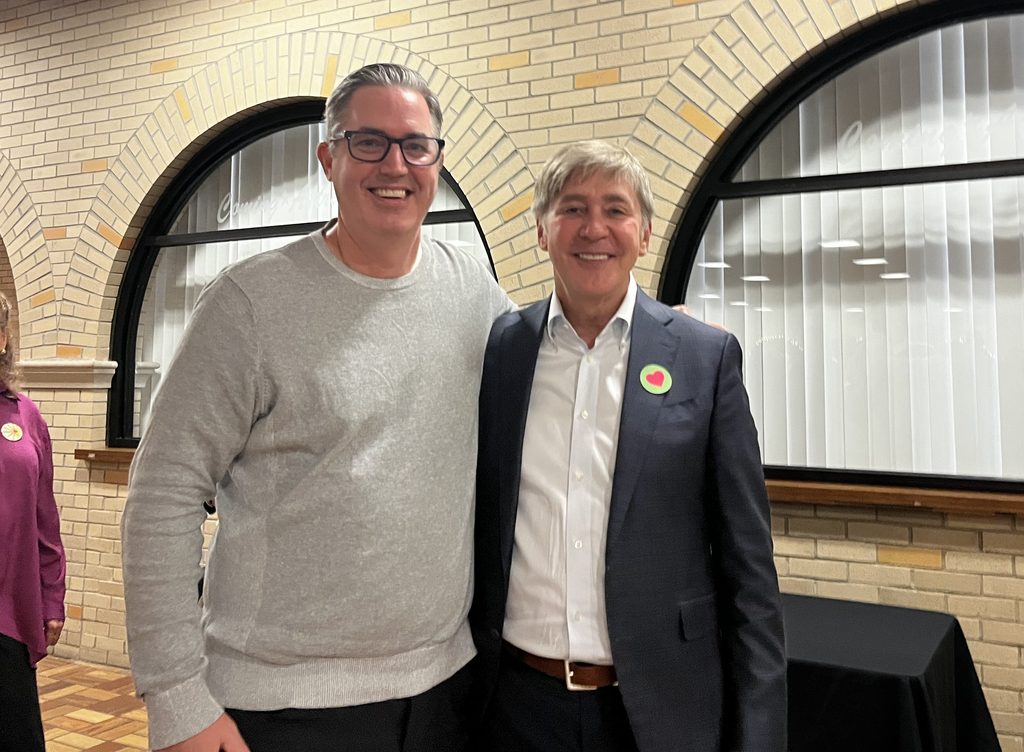
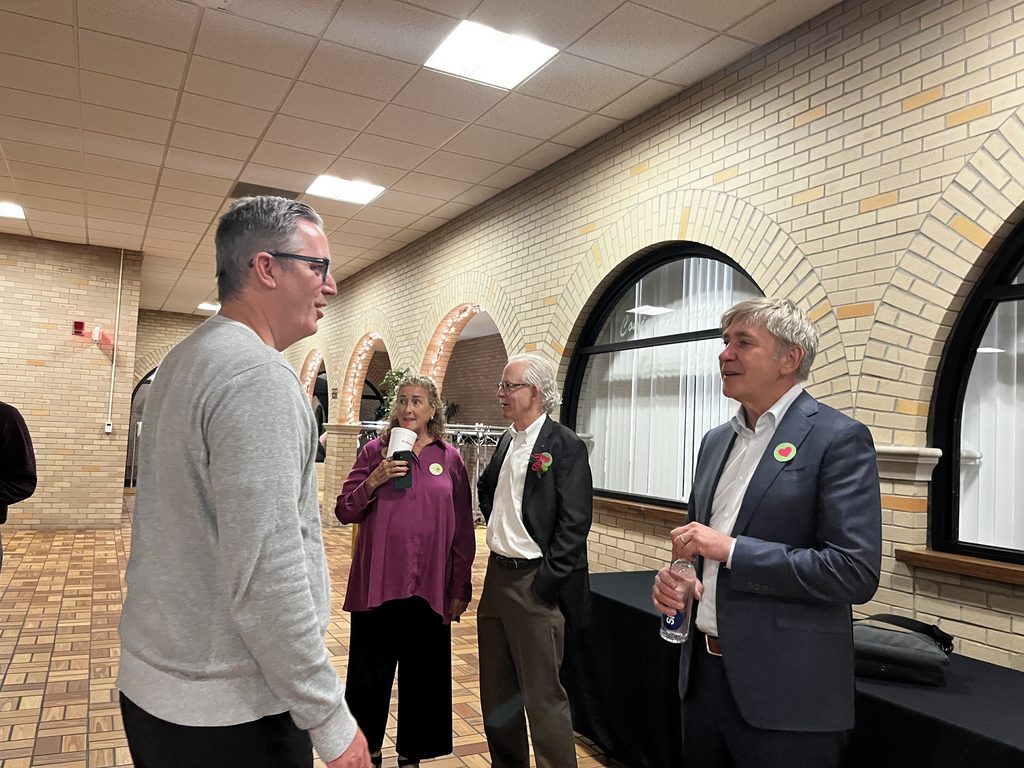
Recently I went to hear Steve Hartman speak. You might know him from On the Road or Kindness 101 on CBS. He’s also from the Toledo area, just like me, so it felt a little like a hometown visit.
I laughed. I cried. Then I laughed again.
If you’ve turned on a TV lately, you know what time of year it is. Every commercial is about politics. It can feel like we’re more divided, and maybe angrier, than ever.
Steve’s answer to that was a simple one. When you actually get to know people, with rare, rare exceptions, people are good.
That’s it. A simple idea, from a guy who has spent his whole career getting to know people.
Every teacher I know already believes this
I think that’s why Steve’s message lands so well with teachers. Almost all of us feel this way, because we see it every day.
In 32 years of teaching and over a thousand students taught, I can honestly count on one hand the kids I didn’t really like.
Now, might there be a student who drives me a little crazy? Yes. (Shocking, I know.) That’s not what I’m talking about. I mean a student I truly struggled to like in almost every circumstance. For me, that has been very, very rare. And, if you asked that student I am confident they would not know it, because I tried really hard to connect with every kid.
I love and care about my students, even when they’re difficult. Even when their behavior is exasperating. I have found, that when I get to know a kid, even the toughest ones, you find a good kid underneath it all.
How I found Kindness 101
I first came across Steve’s Kindness 101 videos around the time of the pandemic. They were very low budget, obviously filmed somewhere in Steve’s house, and his own kids were a big part of the show.
His youngest, his daughter, and his middle child, his son, were the main characters. And first of all, they were equal parts adorable and hilarious.
His son was the serious one. He always manned the dictionary desk and gave a very serious, stodgy definition of the word of the day. Words like: empathy, courage, gratitude, resilience, self-confidence led the discussion of each story. His daughter was the opposite: smiling the whole time, and full of energy, and positivity. Together with Steve at the helm, it was pretty much perfect.
Often they’d interview the people from Steve’s past kindness stories over a Zoom call, and those were really neat too. Sometimes he would even do follow-up stories from five or ten years earlier, just to see where things had gone since then.
One $20 bill
One story Steve shared had a Toledo connection, and remembered from when it made the local news.
In February 2014, 8-year-old Myles Eckert found a $20 bill in the parking lot of a Cracker Barrel in Maumee, just a few miles from me. His first thought? A video game. (Honestly, I’d have thought the same thing.)
Then he spotted a man in uniform inside the restaurant. “Soldiers remind me of my dad,” Myles said. His dad, Army Sgt. Andy Eckert, was killed in Iraq about five weeks after Myles was born. Myles only knew him through photos, his dog tags, and other people’s memories.
So Myles wrapped the $20 in a note and gave it to the soldier, Lt. Col. Frank Dailey of the Ohio Air National Guard. Here’s what the note said:
Dear Soldier, my dad was a soldier. He’s in heaven now. I found this 20 dollars in the parking lot when we got here. We like to pay it forward in my family. It’s your lucky day! Thank you for your service. Myles Eckert, a gold star kid.
After lunch, Myles asked his mom to take him to visit his dad’s grave.
Lt. Col. Dailey didn’t keep the $20. He paid it forward. But he kept the note, and he told Steve he looks at it every day. He called it “a lifetime direction.”
Then the story aired, and that $20 started to multiply. People all over the country wanted to give Myles his $20 back. Instead, his family asked them to donate to Snowball Express, a charity for kids who have lost a parent in war. Within about a month, donations passed $250,000.
That’s more than 12,000 times the original $20. (There’s the math teacher in me.)
Steve shared it to show how even the smallest act of kindness can ripple out far beyond that one moment.
And here’s the part I really want my students to hear: it started with a kid.
I always tell my students, “You’re small, but you’re mighty.”
Sometimes kids think that because they’re young, they can’t do anything important yet. That they have to wait until they’re grown up to make a difference. Stories like this teach children that this is just not true. Lots of kids have made real, positive change in the world. A $20 bill and a kind heart can be enough.
What I told Steve
After the talk, I was lucky enough to meet Steve and chat with him for a few minutes. As you might expect, he was every bit as nice in person as he seems on TV.
I told him the main reason I became a teacher was to have an impact on the future. I wanted to help kids grow up, gain self-confidence, have good lives, and go after their dreams. His message about kind acts rippling out through the world really hit home for me, and I wanted to thank him for it.
We had a really nice conversation.
Kindness 101 in the classroom
If you’re looking for a simple way to start character education with your students, I highly recommend joining the Kindness 101 for Teachers Facebook group.
Inside, you’ll find slideshows and links to all of the Kindness 101 videos, organized by the skill you want to teach: empathy, kindness, honesty, and more. Most videos run right around five minutes, so they fit just about anywhere in your day.
They’re a great way to ease students into a real discussion about whatever the video touches on. Show one, then ask, “What did you notice?” and let the kids take it from there.
Want one that ties right in with Myles’s story? Try Kindness 101: the ripple effect of doing good. It is about how good deeds can lead to other good deeds – what he termed as “domino-ing” of kindness.
How I Use Kindness 101 in my classroom
Every morning, my class starts the day with a morning meeting. Once a week, I pull in one of Steve’s Kindness 101 videos.
I don’t pick them at random. I try to choose one that connects to something I’ve noticed lately, in our classroom or around the school. That way the video isn’t just a nice story about strangers. It’s about us, and why these character traits matter right here.
I don’t have anything special prepared, other than a few questions I like to ask once the video is over:
What character trait was this video about?
What did the people in the video do that showed it?
Where have you seen this trait in your own life?
How could we do the same thing in our own lives, or right here in our classroom?
That last question is my favorite. It’s where “that was a nice video” turns into “hey, I could do that.” Small, but mighty.
Have you used Kindness 101 with your students? Let me know in the comments. I’d love to hear how it’s going.