If you’ve ever bought a “Common Core aligned” resource and then wondered whether it actually matches what your state expects, you’re not imagining things. “Common Core” turns out to be less universal than the label suggests — especially by fourth grade.
I went through the official Grade 4 math standards for all 50 states (plus D.C.) and lined them up against the 28 Common Core standards, code by code. The short version: most states really do keep all 28 intact. But a meaningful handful have quietly dropped, narrowed, or shuffled specific standards to other grades — and if you teach in one of those states, a nationally-sold resource can leave you with gaps or with lessons your students won’t be assessed on.
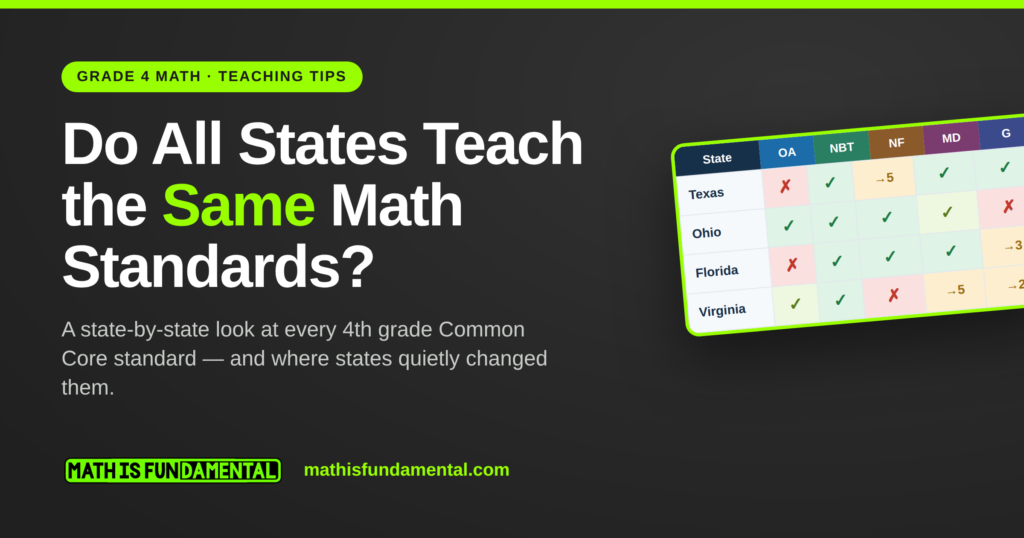
Here’s the whole picture in one chart. (On a phone, swipe the table sideways to see every standard.)
| State | Diff. vs CC | 4.OA | 4.NBT | 4.NF | 4.MD | 4.G | |||||||||||||||||||||||
|---|---|---|---|---|---|---|---|---|---|---|---|---|---|---|---|---|---|---|---|---|---|---|---|---|---|---|---|---|---|
| A.1 | A.2 | A.3 | B.4 | C.5 | A.1 | A.2 | A.3 | B.4 | B.5 | B.6 | A.1 | A.2 | B.3 | B.4 | C.5 | C.6 | C.7 | A.1 | A.2 | A.3 | B.4 | C.5 | C.6 | C.7 | A.1 | A.2 | A.3 | ||
| Common Core StatesAK AZ AR CA CO CT DE DC HI ID IL IA KY LA ME MD MA MI MS MT NV NH NJ NM ND OR PA RI SD TN UT VT WA WV WI WY35 states + DC · bold = verified | 0 | ✓ | ✓ | ✓ | ✓ | ✓ | ✓ | ✓ | ✓ | ✓ | ✓ | ✓ | ✓ | ✓ | ✓ | ✓ | ✓ | ✓ | ✓ | ✓ | ✓ | ✓ | ✓ | ✓ | ✓ | ✓ | ✓ | ✓ | ✓ |
| Alabama2019 Alabama Course of Study: Mathematics | 0+1m | ✓ | ✓ | ✓ | ✓ | ✓ | ✓ | ✓ | ✓ | ✓ | ✓ | ✓ | ✓ | ✓ | ✓ | ✓ | ✓m | ✓ | ✓ | ✓ | ✓ | ✓ | ✓ | ✓ | ✓ | ✓ | ✓ | ✓ | ✓ |
| New YorkNY Next Generation Learning Standards (2017) | 0+1m | ✓ | ✓ | ✓ | ✓ | ✓ | ✓ | ✓ | ✓ | ✓ | ✓ | ✓ | ✓ | ✓ | ✓ | ✓ | ✓ | ✓ | ✓ | ✓m | ✓ | ✓ | ✓ | ✓ | ✓ | ✓ | ✓ | ✓ | ✓ |
| OhioOhio’s Learning Standards for Math (2017) | 1✗1+3m | ✓ | ✓ | ✓ | ✓ | ✓ | ✓ | ✓ | ✓ | ✓ | ✓ | ✓ | ✓ | ✓ | ✓ | ✓ | ✓ | ✓ | ✓ | ✓m | ✓m | ✓ | ✓m | ✓ | ✓ | ✓ | ✓ | ✓ | ✗ |
| North CarolinaNC Standard Course of Study (2017) | 1✗1+7m | ✓ | ✓ | ✓m | ✓m | ✓ | ✓ | ✓m | ✗ | ✓ | ✓ | ✓m | ✓ | ✓ | ✓ | ✓ | ✓ | ✓ | ✓ | ✓m | ✓m | ✓ | ✓m | ✓ | ✓ | ✓ | ✓ | ✓ | ✓ |
| MissouriMissouri Learning Standards (2016) | 2✗2 | ✓ | ✓ | ✓ | ✓ | ✓ | ✓ | ✓ | ✓ | ✓ | ✓ | ✓ | ✓ | ✓ | ✓ | ✓ | ✗ | ✓ | ✓ | ✓ | ✓ | ✓ | ✓ | ✓ | ✓ | ✗ | ✓ | ✓ | ✓ |
| GeorgiaGeorgia’s K-12 Math Standards (2021, eff. 2023-24) | 2✗1 →1+3m | ✓ | ✓ | ✓ | ✓ | ✓ | ✓ | ✓m | ✓ | ✓ | ✓ | ✓ | ✓ | ✓ | ✓ | →G5 | ✓ | ✓ | ✓ | ✓m | ✓ | ✓ | ✓ | ✓ | ✓m | ✗ | ✓ | ✓ | ✓ |
| Kansas2017 Kansas Mathematics Standards | 3✗3 | ✓ | ✓ | ✓ | ✓ | ✓ | ✓ | ✓ | ✓ | ✓ | ✓ | ✓ | ✓ | ✓ | ✓ | ✓ | ✓ | ✓ | ✓ | ✓ | ✓ | ✓ | ✓ | ✗ | ✗ | ✗ | ✓ | ✓ | ✓ |
| NebraskaNE College & Career Ready Standards (2023) | 5✗5 | ✗ | ✗ | ✓ | ✓ | ✗ | ✓ | ✓ | ✗ | ✓ | ✓ | ✓ | ✓ | ✓ | ✓ | ✓ | ✗ | ✓ | ✓ | ✓ | ✓ | ✓ | ✓ | ✓ | ✓ | ✓ | ✓ | ✓ | ✓ |
| TexasTexas Essential Knowledge & Skills – TEKS (rev. 2024) | 5✗3 →2 | ✗ | ✗ | ✓ | →G5 | ✓ | ✓ | ✓ | ✓ | ✓ | ✓ | ✓ | ✓ | ✓ | ✓ | →G5 | ✗ | ✓ | ✓ | ✓ | ✓ | ✓ | ✓ | ✓ | ✓ | ✓ | ✓ | ✓ | ✓ |
| FloridaFlorida B.E.S.T. Standards (MA.4, 2020) | 6✗2 →4 | ✗ | ✗ | ✓ | ✓ | ✓ | ✓ | ✓ | ✓ | →G3 | ✓ | ✓ | ✓ | ✓ | ✓ | ✓ | ✓ | ✓ | ✓ | ✓ | ✓ | ✓ | ✓ | ✓ | ✓ | ✓ | →G3 | →G3 | →G3 |
| VirginiaVirginia Standards of Learning – SOL (2023) | 6✗2 →4+6m | ✓m | ✓m | ✓ | ✓m | ✓ | ✓ | ✓ | ✓m | ✓ | ✓ | ✓ | ✓ | ✓ | ✓ | ✓m | ✗ | ✓ | ✓ | ✓ | ✓ | ✓ | ✗ | →G5 | →G5 | →G5 | ✓ | ✓m | →G2 |
| IndianaIndiana Academic Standards – Math (2023) | 7✗7+1m | ✗ | ✓ | ✓m | ✓ | ✓ | ✗ | ✓ | ✓ | ✗ | ✓ | ✓ | ✓ | ✓ | ✓ | ✗ | ✗ | ✓ | ✓ | ✓ | ✓ | ✓ | ✓ | ✓ | ✓ | ✗ | ✓ | ✓ | ✗ |
| South CarolinaSC College- & Career-Ready Standards (2025) | 7✗1 →6+3m | ✓ | ✓ | ✓m | ✓m | ✓ | →G5 | ✓ | →G3 | ✓ | ✓ | ✓ | ✓ | ✓ | ✓ | ✓m | ✓ | ✓ | ✓ | ✓ | ✓ | ✓ | ✓ | →G6 | →G6 | →G6 | →G3 | ✓ | ✗ |
| OklahomaOklahoma Academic Standards – Math (2022) | 11✗9 →2+7m | ✗ | ✗ | ✓m | ✗ | ✓ | ✗ | ✓ | →G3 | →G3 | ✓m | ✓m | ✓ | ✓ | ✓m | ✗ | ✗ | ✓ | ✓ | ✓m | ✓m | ✓m | ✓ | ✗ | ✓ | ✗ | ✓ | ✓ | ✗ |
| MinnesotaMinnesota Academic Standards (2007, in effect) | 12✗6 →6+7m | ✗ | ✗ | ✓m | →G6 | ✓ | ✓m | ✓m | →G3 | →G3 | ✓ | ✓ | ✓ | ✓ | ✓m | →G6 | ✗ | ✓ | ✓ | →G6 | ✗ | ✓m | ✗ | ✓m | ✓m | ✗ | →G3 | ✓ | ✓ |
How to read it: Each column is a Common Core Grade 4 math standard; each row is a state. The Diff. vs CC column counts standards a state does not teach at Grade 4 as written (✗ removed + → moved to another grade); ✓m cells are narrower than Common Core and are listed separately as “+nm.” A ✓ means the concept is addressed, not that the wording is identical, and ✗ means “no dedicated standard,” not “never taught.” Based on each state’s current official standards (2026–27 school year).
The patterns worth knowing
Even though every state’s document looks unique, the real differences cluster around just a few topics:
- Multiplicative comparison (4.OA.A.1–A.2 — the “times as many” idea). Texas, Florida, Nebraska, Oklahoma, and Minnesota don’t carry it as a distinct Grade 4 standard.
- Angle measurement (4.MD.C.5–C.7 — protractors and additive angles). Virginia pushes the whole cluster to Grade 5; South Carolina’s 2025 standards move it all the way to Grade 6; Kansas drops it from Grade 4 entirely.
- Lines of symmetry (4.G.A.3). Gone from Ohio, Oklahoma, Indiana, and South Carolina; moved down to Grade 2 in Virginia.
- Adding fractions with denominators 10 and 100 (4.NF.C.5). One of the most commonly cut — missing or narrowed in a surprising number of states.
- Rounding (4.NBT.A.3). North Carolina removes it from Grade 4; Nebraska has no dedicated rounding standard anywhere in the elementary grades.
A few states that stand out
Texas, Virginia, and Nebraska never adopted Common Core, so their frameworks (TEKS, the SOL, and Nebraska’s own standards) differ the most in wording — but they still overlap heavily on number and fractions.
Florida’s B.E.S.T. standards keep most of Grade 4 but relocate the geometry cluster down to Grade 3, so fourth graders there focus on angles and area rather than classifying shapes.
Ohio is a great example of a “small but real” change: it kept the Common Core structure but removed lines of symmetry and rewrote its measurement standards to be metric-only — no customary units.
Minnesota is the outlier. It never adopted Common Core for math and still uses standards that place several Grade 4 topics in completely different years (a revised set doesn’t take effect until 2027–28).
And the reassuring part: states like Alaska, Arizona, Tennessee, Kentucky, and dozens more may have rebranded Common Core under their own names, but at Grade 4 the standards are the same 28.
What this means for your classroom
If you’re in one of the 37 “Common Core States,” a well-aligned Grade 4 resource should map cleanly to your pacing. If you’re in a state with real differences, it’s worth a two-minute check before you plan a unit: glance at your row, note the ✗ and →G# marks, and adjust. A standard your state moved to Grade 5 isn’t wrong to preview — but it probably isn’t on your test.
My 4th Grade Math Guided Notes are built on the full Common Core Grade 4 sequence, so they cover everything in that top row — and because each page is tied to its standard code, it’s easy to skip or supplement the few your state handles differently.
Methodology & sources
Every judgment here comes from each state’s current official mathematics standards (the version in effect for the 2026–27 school year) or the state’s own Common Core crosswalk. The Common Core codes themselves come from thecorestandards.org. Standards get revised on staggered cycles, so before making a high-stakes decision for a single state, it’s always smart to confirm against that state’s current standards document.
Spot a change your state made that I missed? Leave a comment — I keep this chart updated.