Calling myself a control freak is probably a little extreme. But I’ll say this: one of the things I love about being a teacher is that you do have a lot of control.
I’ve always thought of it like conducting an orchestra. You set the tempo. It’s up to you to decide what’s going to stand out in the piece you’re playing. For better or worse, you are the most impactful person in that room.
When I was starting out, a professor of mine put it a different way. “The classroom is not a democracy,” he said. “It’s a benevolent dictatorship. You are a kind king because you have their best interests in mind.”
That was my philosophy for most of my career. And honestly, I still don’t think it’s wrong.
But somewhere in there it stopped being a philosophy and started being a habit.
“That would never work in my classroom”
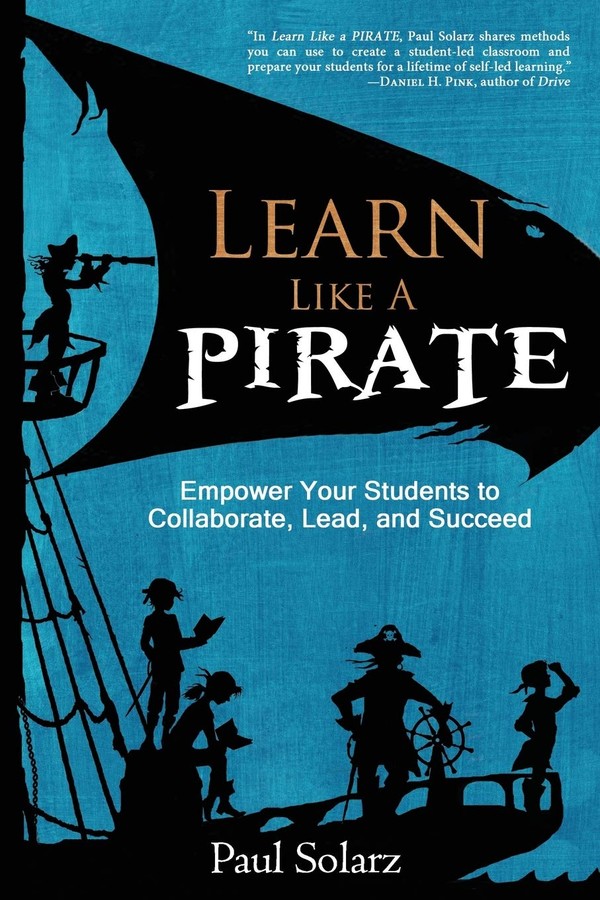
Later in my career I read Learn Like a PIRATE by Paul Solarz. Excellent book. Student-led classroom, kids running things, the whole idea.
And I thought: this sounds great, but it would never really work in a regular classroom.
I told myself Solarz must have perfectly behaved students in some perfect district. Not my building. Not my kids. Pie in the sky.
Looking back at that book now, there was a lot in there I could have taken and used a whole lot sooner. I just wasn’t ready to hear it.
The book that finally got through
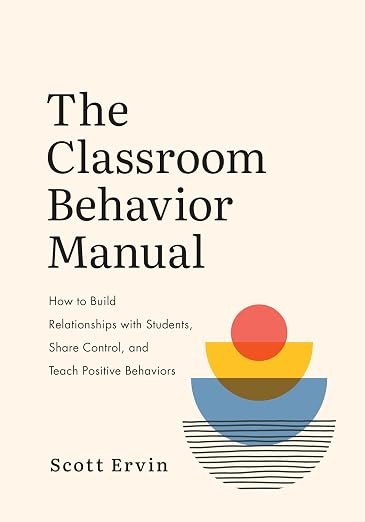
What actually moved me was The Classroom Behavior Manual by Scott Ervin. I read the book, and I also spent three days at a workshop with him one summer.
Here’s why it landed when Solarz hadn’t. About 98% of what he shared was already aligned with what I felt like I was doing in my classroom. It wasn’t asking me to burn everything down and start over. Mostly it gave me some confidence — somebody else is doing it this way, it worked for them, it’s been working for me. It was good for the other teachers from my district who came with me, too. They got to see that side of things.
But then there was the other 2%. Ervin has a whole piece on classroom jobs and releasing control — the same thing Solarz was saying. This time I thought, alright. I’m going to try this.
The subtitle of his book is How to Build Relationships with Students, Share Control, and Teach Positive Behaviors. Share control. It’s right there on the cover, and it still took me three days in a workshop to actually hear it.
Where the resistance really came from
I want to be honest about this, because I don’t think my resistance was ever really about my students.
It’s how I learned to teach. The veteran teachers I came up under did everything themselves. The teacher takes attendance. The teacher takes the lunch count. The teacher answers the phone when it rings. The teacher dismisses table groups for lunch. Those things live with the teacher — that’s just how it is.
And their teachers taught them that way. And their teachers taught them that way. A long line of teachers all doing the little things, because that’s who does the little things.
When you’ve done it that way for long enough, it just becomes a habit, and you stop questioning whether it was ever necessary in the first place. Is it actually necessary for me to do all of this?
That one still gets me. A fourth grader answering my classroom phone, and it had never once occurred to me to ask.
What happened when I let go
The next school year I started class jobs. It’s been three years now, and I’m still doing it — still adding jobs, still getting more creative with them so every kid has something that’s theirs.
It was more successful than I expected, in two separate ways.
It took weight off my shoulders. Not the big stuff. The little micro-decisions teachers make day after day after day, all the small things you have to remember. Some of those just stopped being mine.
It gave students real agency. It empowered them to help make our classroom a better place — and they want that. Deep down, kids want a room where they feel calm and comfortable and relaxed, where they can learn, where school is fun. Class jobs let them build that instead of just receiving it.
The part I didn’t see coming
Here’s what surprised me most: accountability started moving sideways instead of down.
They’re not only doing things because I’m the adult asking. Sometimes they’re accountable to a classmate, or a teammate, or whoever’s responsible for that job. We’re here to learn, we show respect to each other, we follow the school rules and our classroom rules — and they’re the ones holding each other to it. Not me. Not an administrator telling them that’s the expectation. Each other.
What’s actually on my job board
Here’s the whole list, more or less. Some of these I started with, most I’ve added over three years. You do not need all of them, and half the value is in picking the ones that fit how your room actually runs.
The things that used to be mine
- Attendance — takes the count and enters it. This was the first one I let go of, and the one I was most certain would go wrong, but the opposite was true. Instead of me forgetting once a week, they almost never forget.
- Lunch Count — collects everyone’s choice and gets the numbers to the office.
- Office Messenger — runs anything that has to physically get down to the office.
- Phone Answerer — picks up the classroom phone. Most kids have no idea how to answer a real one; they’ll pick it up and just listen. You have to teach them to say “Hello, Mr. Pransky’s room. How can I help you?” — and to say goodbye before they hang up.
- Door Answerer — greets whoever knocks, takes the message or comes and gets me if it’s something I need to handle.
- Copier — handles the copy runs and brings them back.
- Agenda Changer — updates the daily agenda so it’s right before the day starts instead of halfway through first period.
- Weather Reporter — checks and reports the forecast. Tells the class if the temperature requires coats or if it is too cold to go outside. Our school stays inside below a wind chill of 20°F.
Transitions and movement
- Lunch Dismisser and End of Day Dismisser — release table groups once the group actually meets the standard. Choose these two carefully.
- Line Monitor — keeps the line together in the hallway.
- Chair Pusher — the last sweep to make sure chairs are pushed in.
- Bathroom Monitors (boys and girls) — keep the bathroom trip quick and orderly.
- Timekeeper and Time Reminder — run our class timer for activities and signal transitions. Kids are far better at this than I am.
- Recess Game Manager — makes sure everyone keeps the indoor recess games organized.
Keeping the room running
- Paper Passers (I use two) — hand out everything. Two, because it is faster and done frequently.
- Desk Inspector — checks desks against the standard we set at the end of the day.
- Desk Straightener — makes sure rows/groups are straight at the end of the day.
- Desk Wiper — wipes surfaces down.
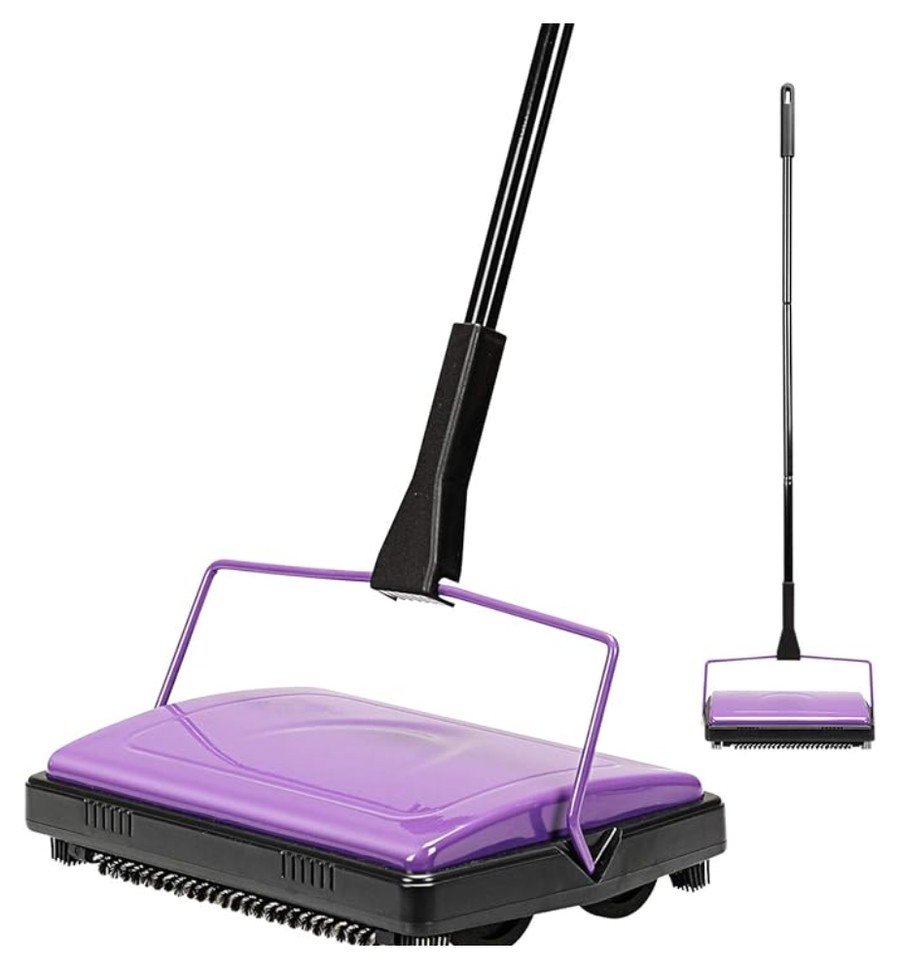
- Floor Sweeper — the quick end-of-day sweep, with a manual carpet sweeper.
- Pencil Sharpener — keeps the community pencils sharp so nobody’s grinding away in the middle of a lesson.
- Library Organizer — keeps the classroom library shelved and facing out.
- Computer Organizer — devices plugged in, counted, and back in the right slot.
- Locker Checker — flags the lockers that are becoming a disaster before they actually become one.
- Plant Tender — waters the plants weekly.
- Comfort Settings — lights, blinds, temperature.
The two that do more than they look like they do
- Dojo Points — when we have a good fire drill or earn whole-class points, this student gives the class positive Dojo points. Points are also given for doing a student job every week.
- Student Job Subs — you need at least a couple of these for when students are absent that day. These remove most of the daily friction from the whole system. If you only add one thing to your board, add these.
One of these does more heavy lifting than the rest.
Table dismissers
Choose this person wisely. These kids are sticklers.
“Nope, this group isn’t ready, you’ve got paper on the floor.” “This group isn’t ready — you guys didn’t pick up your water bottles.” “Your row isn’t straight.”
They will hold their groups to whatever standard you set at the beginning of the year, and they do not go soft on it. I’ll sometimes give this job to a kid who I think could use a little positive power, and it’s good for them.
What happens when a kid doesn’t do the job
This is the question I get asked most, and the answer sounds harsher than it actually plays out in the room.
In a regular job, what happens if you don’t do the work? You get fired. So that’s what I do.
Every kid gets one goof-up. I tell them that up front, so none of it is a surprise. After that, I fire them.
Here’s the part that makes it work: if you get fired, you have to hire the next person and train them. You pick who takes over your job, and you teach them to do it properly.
That softens the blow. Getting fired stings, but getting to choose who follows you means you’re still the one handing something over — and the job doesn’t fall apart just because it changed hands.
I stick to it, though. The whole point is that they’re accountable for doing the things they’re supposed to do, and when they forget to do them, they lose the privilege.
And it is a privilege — that’s the part that surprised me. You’d assume some kids just wouldn’t want the extra work. Almost none of them feel that way. They want the little bit of power, the little bit of agency, the little bit of importance. They’re doing something a teacher would normally do, and they know it.
If you’re where I was
You don’t have to hand over everything at once. I didn’t.
Start with one thing you do every single day without thinking about it. Then ask yourself honestly whether you’re the only one who could possibly do it — or whether you’re doing it because that’s how it’s always been done.
Then teach a kid to do it. Actually teach them, because they will need to be taught. And then let them.
A note: this post contains Amazon affiliate links. If you buy through one, I earn a small commission at no extra cost to you.